

Bridging Health work force gaps in amhara Region
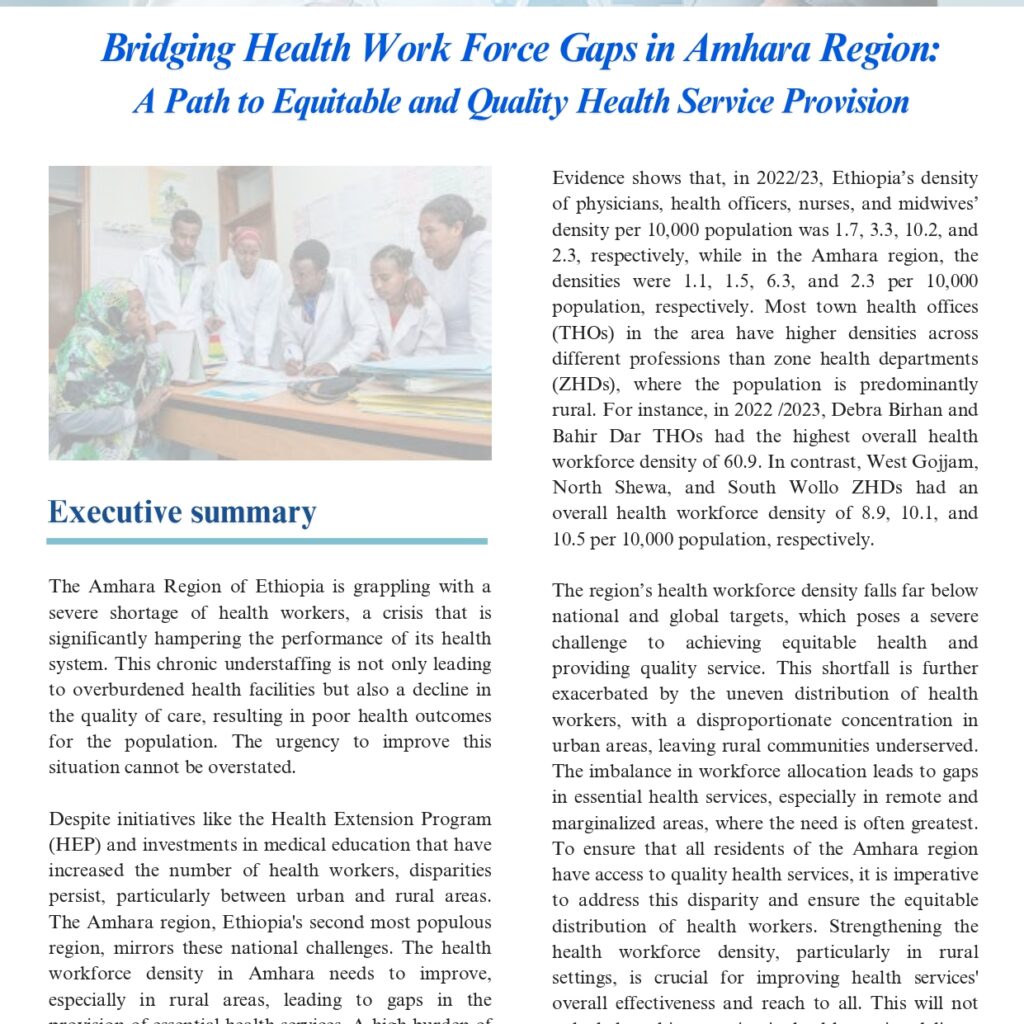
The Amhara Region of Ethiopia is grappling with a severe shortage of health workers, a crisis that is significantly hampering the performance of its health
system. This chronic understaffing is not only leading to overburdened health facilities but also a decline in the quality of care, resulting in poor health outcomes for the population. The urgency to improve this situation cannot be overstated.
Improving Institutional Delivery in Amhara Region
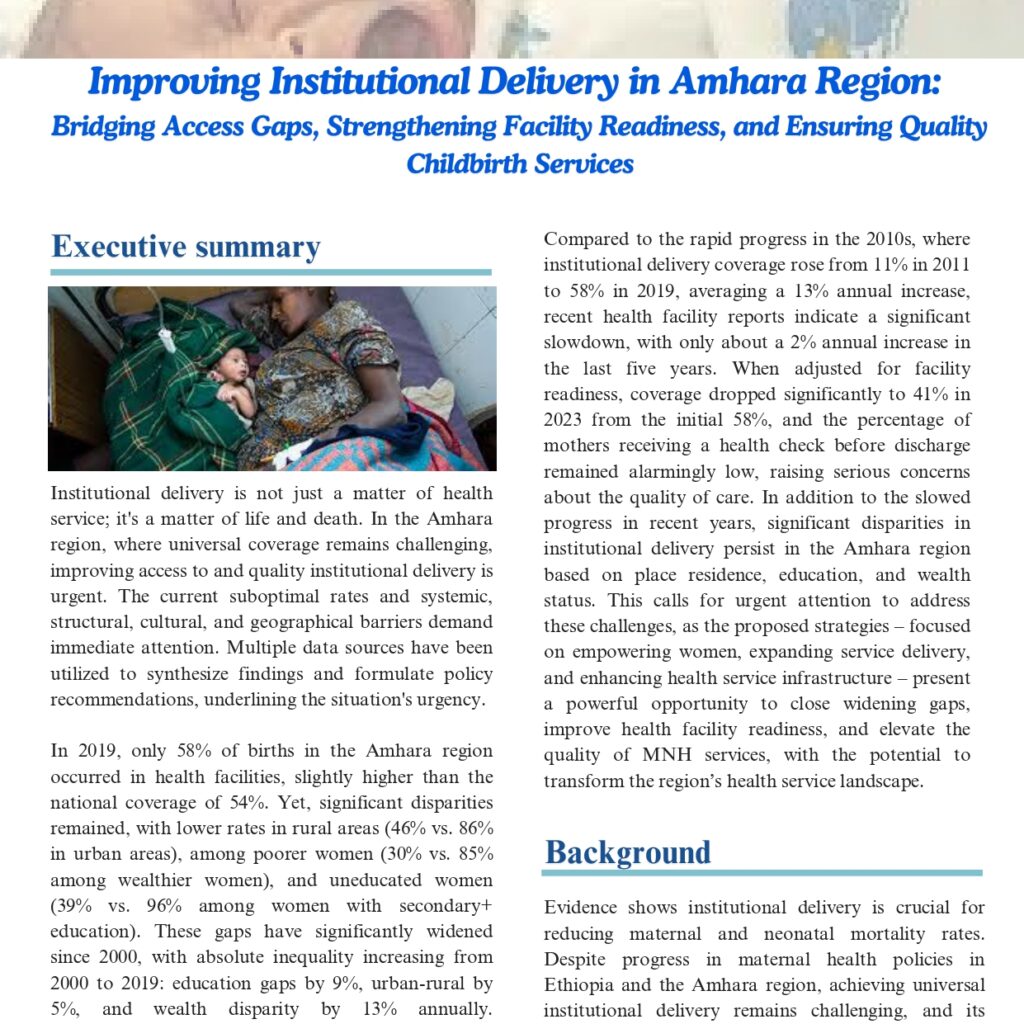
Institutional delivery is not just a matter of health service; it’s a matter of life and death. In the Amhara region, where universal coverage remains challenging, improving access to and quality institutional delivery is urgent. The current suboptimal rates and systemic, structural, cultural, and geographical barriers demand immediate attention. Multiple data sources have been utilized to synthesize findings and formulate policy recommendations, underlining the situation’s urgency.
Better data , better decisions
Effective decision-making in the health sector relies heavily on data availability and quality. A robust
health management information system (HMIS) enhances data quality through improved measurement and standardization, making it a reliable source of evidence for decision-making, ultimately resulting in improved health outcomes. The HMIS data quality in the Amhara region was assessed for completeness, outlier identification, and internal consistency checking. Furthermore, the reliability of health statistics generated from HMIS data is compromised due to inaccuracies in estimating denominators, mainly due to outdated or imprecise population projections. These inaccuracies may lead to flawed health statistics, which can misinform policy and program decisions. This policy brief presents urgent and actionable policy and strategic recommendations to improve the quality of HMIS data in the Amhara region.
Closing The Immunization Gaps
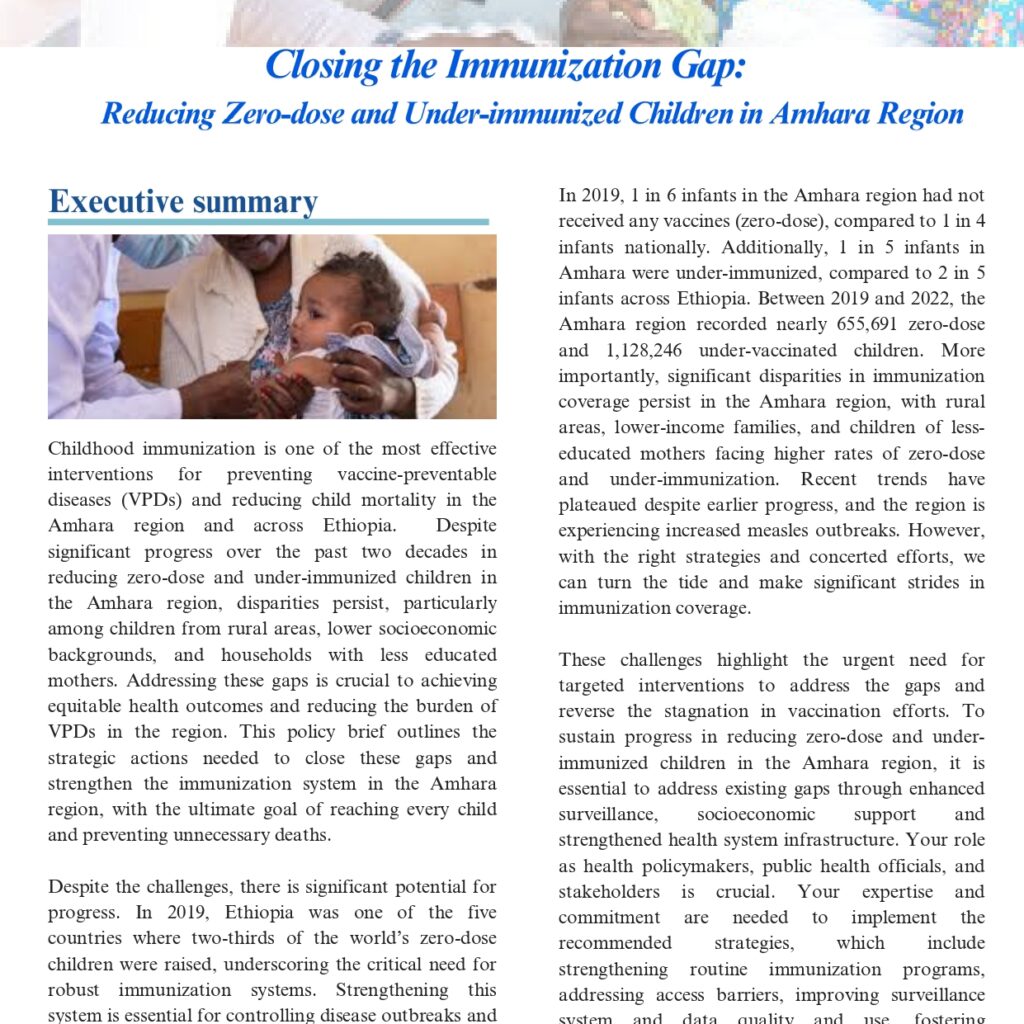
Childhood immunization is one of the most effective interventions for preventing vaccine-preventable diseases (VPDs) and reducing child mortality in the Amhara region and across Ethiopia. Despite significant progress over the past two decades in reducing zero-dose and under-immunized children in the Amhara region, disparities persist, particularly among children from rural areas, lower socioeconomic backgrounds, and households with less educated mothers. Addressing these gaps is crucial to achieving equitable health outcomes and reducing the burden of VPDs in the region. This policy brief outlines the strategic actions needed to close these gaps and strengthen the immunization system in the Amhara region, with the ultimate goal of reaching every child and preventing unnecessary deaths

Enhancing ANC Seeking
Despite improvements, antenatal care (ANC) coverage in the Amhara region remains below national targets. Many women initiate ANC contacts late in pregnancy and insufficiently utilize the recommended minimum of four contacts, particularly in rural areas and among women with less education and from poorer households. The quality of ANC services varies by urban and rural and across health facilities, with limited availability of essential components like ultrasound scans and laboratory tests and inconsistent adherence to ANC guidelines and protocols by healthcare providers. This policy brief outlines the current situation, identifies key challenges, and offers strategic recommendations to enhance ANC-seeking behavior and service quality in the Amhara region

Better data , better decisions
Amhara region faces a critical public health challenge with relatively high rates of newborn deaths both at apopulation and institutional level. While there have been significant strides in reducing under-5 mortality rates, progress in reducing neonatal mortality rates has been less pronounced, especially since early neonatal deaths remain alarmingly high. The birth of a child, while apleasant occasion, also carries significant risks, including neonatal mortality. However, in the current context of the region, many families continue to experience the heartbreak of losing their newborns due to preventable causes. The occurrence of neonatal death in rural residents was higher than in urban. This disparity underscores the urgent need for policy action to address the factors contributing to the region’s newborn mortality.